
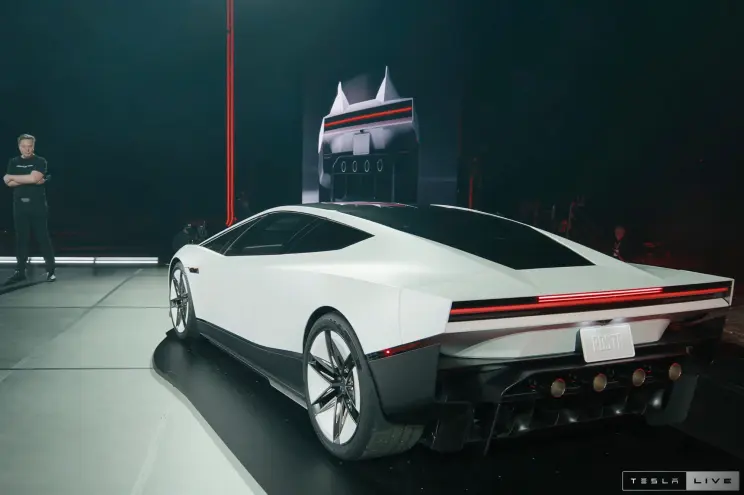
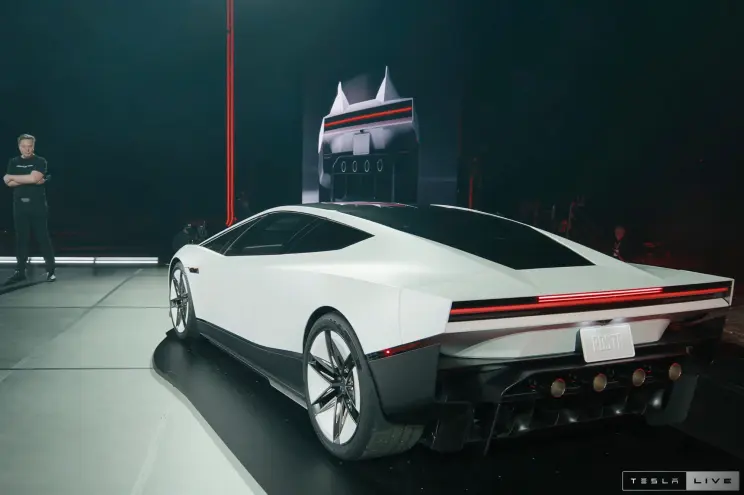
At a live event at a SpaceX facility in Texas, Elon Musk officially showcased the next-gen SpaceX Roadster, a vehicle he proudly claims makes sci-fi a reality. Developed as a historic collaboration between Tesla and SpaceX, the two seater electric supercar features a multi-mode suction system and 10 high-pressure air thrusters that allow it to perform mid air flips, hover, and leap over other vehicles. Billed as Tesla’s first flying car, this mind-bending machine can rocket from 0 to 60 mph in a record-shattering 0.81 seconds. While it won’t be navigating long-distance city commutes anytime soon, Musk confirmed that production for this groundbreaking engineering marvel is slated to begin in 2028.
The Big Reveal: Elon Musk’s 2026 Shocking Announcement
The Big Reveal: Elon Musk’s 2026 Shocking Announcement took the tech world by storm, completely redefining the future of personal transportation. Standing on a packed stage, Musk stunned the audience by unveiling a revolutionary breakthrough that many thought was decades away: Tesla’s first flying car. This cutting edge vehicle seamlessly blends advanced electric propulsion with autonomous aerial navigation, promising to bypass gridlocked city streets entirely. By shifting commuting from two dimensions to three, the announcement has sparked intense global debate over aviation regulations, urban infrastructure, and the rapidly accelerating reality of sci-fi technology in everyday life.
Meet the New Tesla Roadster: A Car That Can Fly?
The automotive world was left stunned when Elon Musk hinted that the upcoming next-generation Tesla Roadster might feature technology capable of lifting the vehicle off the ground. By incorporating specialized rocket thrusters developed by SpaceX, this hyper car aims to blur the line between a traditional electric vehicle and an aircraft. Positioned as Tesla’s first flying car, this ambitious project promises unprecedented acceleration and short periods of actual flight. While many details remain under wraps, the concept has completely redefined what enthusiasts expect from the future of personal transportation.
Powered by SpaceX: The Rocket-Style Gas Thrusters
The upcoming Tesla Roadster aims to blur the line between automotive engineering and aerospace technology by incorporating an optional SpaceX package. This revolutionary system utilizes ultra high pressure compressed air thrusters arranged around the vehicle to drastically improve acceleration, braking, and cornering maneuvers. By adapting cold-gas thruster tech used in orbital rockets, this configuration represents Tesla’s first flying car, unlocking the theoretical ability to briefly hover above the ground and completely redefine modern supercar performance.
0 to 60 MPH in Under 1 Second: Mind-Blowing Speed
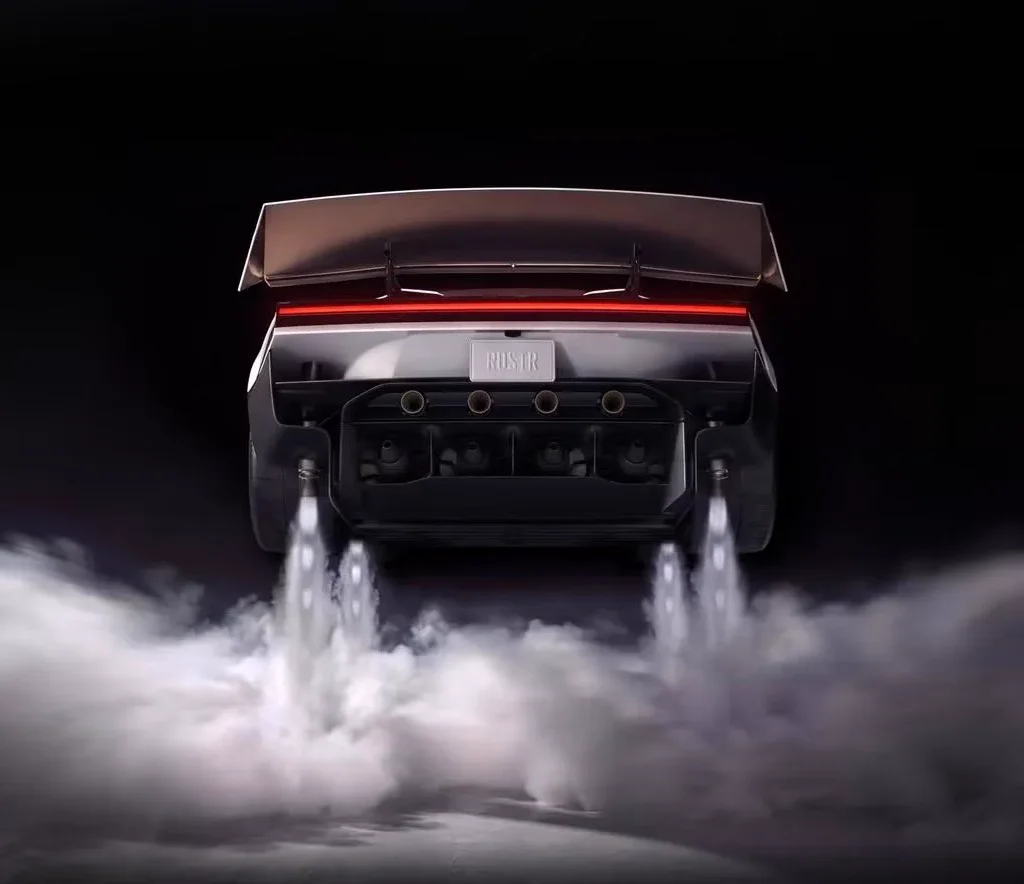
0 to 60 MPH in Under 1 Second: Mind-Blowing Speed represents a paradigm shift in automotive engineering, pushing the absolute boundaries of physics and human tolerance. Achieving this level of acceleration requires instantaneous torque, advanced aerodynamics, and cutting edge propulsion systems that blur the line between ground transport and aerospace technology. As manufacturers compete to break these impossible speed barriers, rumors and concepts continue to capture the public’s imagination, including futuristic ideas like Tesla’s first flying car redefining what we consider a traditional vehicle. Ultimately, crossing the sub one second threshold moves the industry past mere track performance and enters a whole new realm of science fiction turned reality.
The Mind-Air Stunts: Flipping and Levitating Without Wings
The Mind Air Stunts: Flipping and Levitating Without Wings showcases the extraordinary future of personal transportation, where advanced technology makes traditional aerodynamics obsolete. Instead of relying on bulky wings or exposed rotors, next-generation vehicles manipulate magnetic fields, propulsion systems, and anti gravity concepts to perform breathtaking aerial maneuvers in tight urban spaces. A prime example of this revolutionary shift is the Tesla first flying car, a vehicle engineered to seamlessly execute mid-air flips and stable levitation without ever needing a runway. By replacing mechanical surfaces with intelligent thrust vectoring, these machines turn what once seemed like science fiction into a flawless display of gravitational defiance.
Flying vs. Jumping : How Does Technology Actually Work?
While “jumping” technology relies on a sudden, powerful burst of kinetic energy to launch a vehicle or robot into a temporary, ballistic trajectory, true “flying” technology requires continuous aerodynamic lift, thrust, and precise control to sustain and navigate through the air. Jumping mechanisms often powered by compressed springs, pneumatic actuators, or explosive thrusters are designed for rapid obstacle clearance but offer little to no guidance once airborne. In contrast, flying systems utilize complex propulsion, fixed wings, or rotating blades to overcome gravity over extended distances and periods. As innovators push the boundaries of modern engineering, breakthroughs in vertical takeoff, autonomous stability, and lightweight materials are rapidly closing the gap between science fiction and reality; in fact, the recent successful test of the latest flying car proves that we are closer than ever to a future of everyday aerial transit.
When Will It Hit the Market? Expected Production Timeline
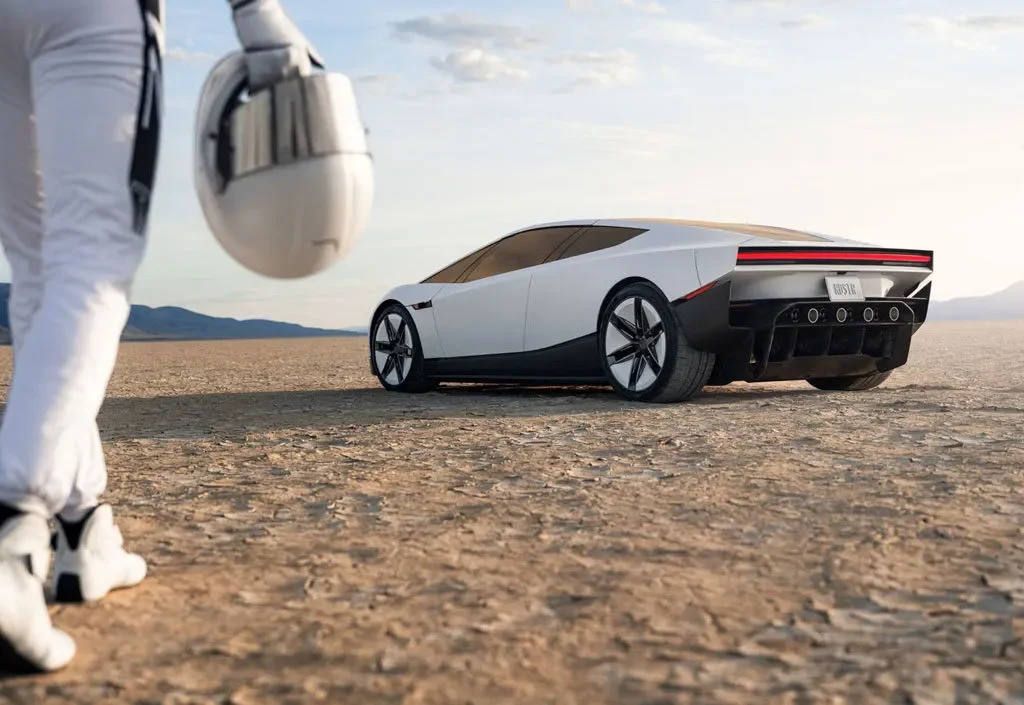
The road to commercially viable advanced air mobility is rapidly accelerating, with leading aerospace innovators aiming for initial market entry within the next few years. While low volume manufacturing and early safety certification phases are projected to wrap up by 2026 or 2027, widespread consumer availability hinges on navigating strict global aviation regulations and building dedicated takeoff infrastructure. Industry experts anticipate that pre-orders will begin transitioning into real world deliveries by the turn of the decade, paving the way for a revolutionary shift in daily transportation. Test last first flying car.
Price and Deposit: How Much Will the Flying Roadster Cost?
While official pricing has not been set in stone, industry experts estimate that this highly anticipated vehicle will command a premium price tag, likely starting well over $200,000. To secure a spot on the waiting list, eager buyers are expected to place a substantial, refundable deposit upfront to lock in their reservations. As anticipation reaches a fever pitch, aviation and automotive enthusiasts alike are closely watching the development of Tesla’s first flying car.
Regulatory and Safety Challenges: Is It Legal to Fly on Roads?
The legality of operating a flying car on public roads depends entirely on how the vehicle complies with both automotive and aviation regulations. While legal frameworks like the FAA’s “Special Airworthiness Certification” allow roadable aircraft to fly in designated airspace, driving them on traditional streets requires strict adherence to standard highway safety, crash-test, and environmental rules. The concept took a massive leap into the public consciousness when the Tesla’s first flying car Roadster, equipped with SpaceX cold-gas thrusters, promised a future where a production car could literally hover or fly. However, this cross-industry innovation creates a massive regulatory headache for agencies like the NHTSA and FAA, who must determine if a vehicle with jet-like propulsion can safely coexist with everyday traffic, or if it poses too great a hazard to pedestrians and infrastructure.
The Future of Transportation: Has Sci-Fi Finally Become Reality?
For decades, science fiction teased us with visions of anti-gravity commutes and sleek vehicles zipping through the clouds, but today’s breakthroughs suggest that the boundary between fantasy and friction-less reality is rapidly dissolving. Autonomous drones, hyperloop concepts, and electric vertical takeoff craft are moving from blueprints to test tracks, proving that tomorrow’s transit will look radically different. This technological leap feels even closer as rumors and concepts circulate about Tesla’s first flying car, signaling a major shift where traditional roads may soon become optional. As artificial intelligence and advanced propulsion converge, we are no longer just dreaming about the future of travel we are actively building it.
Leave a Reply
You must be logged in to post a comment.