
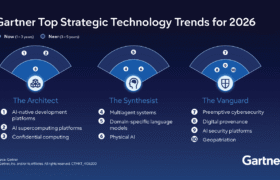
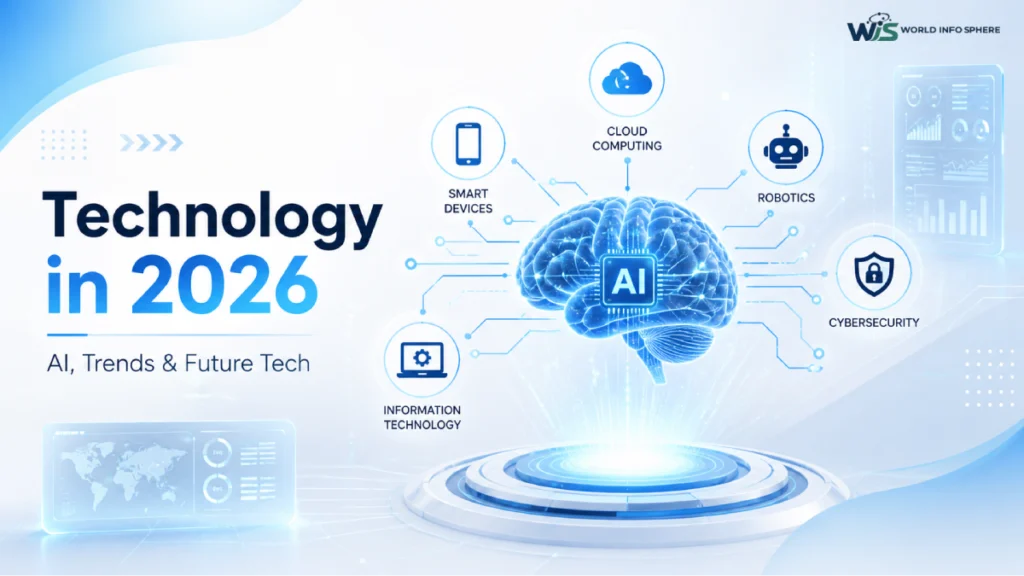
Technology Trends 2026 are changing the way people around the world work, learn, communicate, shop, and use digital services. Artificial intelligence, cloud computing, cybersecurity, robotics, smart devices, and advanced computing are becoming important parts of modern life.
For people in the United States, United Kingdom, Canada, Australia, India, Germany, the UAE, Saudi Arabia, Singapore, and other countries, new technology is creating both opportunities and challenges.
This guide explains the latest technology trends in 2026 in simple English and looks at the technologies that may have the biggest impact on the future.
Why Technology Is Changing So Quickly
Technology is developing faster than ever because businesses, researchers, and consumers are constantly looking for better ways to solve problems.
Cloud services allow companies to build and operate digital products at scale. Artificial intelligence can process large amounts of information and help automate tasks. Modern smartphones and computers are also becoming more powerful and capable.
As these technologies work together, new products and services can reach people across different countries very quickly.
Technology Trends 2026: Artificial Intelligence and Generative AI
Artificial intelligence is one of the biggest technology trends of 2026.
Generative AI can create text, images, software code, summaries, and other digital content. Many businesses are using AI to improve productivity, customer service, research, marketing, and software development.
AI is also becoming more specialized. Instead of using one general AI system for every task, companies can use specialized models and tools for particular industries and workflows.
This makes AI technology trends 2026 an important search topic for businesses, students, developers, and technology users worldwide.
AI Agents and Intelligent Automation
AI agents are another important development in modern technology.
Unlike a simple chatbot that mainly responds to questions, an AI agent can be designed to complete a series of related tasks. It may gather information, use software tools, analyze results, and help complete a workflow.
Businesses may use AI agents for customer support, research, data analysis, software development, scheduling, and other digital tasks.
As these systems improve, intelligent automation could become a normal part of many workplaces.
Technology Trends 2026: Cybersecurity and Online Safety
Cybersecurity is becoming increasingly important as more people and businesses depend on digital services.
Cybersecurity protects computers, networks, applications, accounts, and information from unauthorized access and other digital threats.
Artificial intelligence can help security teams detect unusual activity and analyze large amounts of security information. At the same time, advanced technology can also create new challenges for security professionals.
For everyday users, basic security practices remain important. Strong passwords, multi-factor authentication, software updates, and careful handling of personal information can help improve online security.
Cloud Computing and Digital Infrastructure
Cloud computing is one of the main technologies supporting the modern internet.
Instead of storing everything on a local computer, businesses can use cloud platforms for computing power, storage, databases, applications, and other digital services.
Cloud computing is especially important for AI because many AI applications require significant computing resources.
Companies in different regions can also use cloud infrastructure to deliver digital products and services to customers around the world.
Technology Trends 2026: Edge AI and Smart Devices
Edge AI brings artificial intelligence closer to the device where information is created.
Some AI processing can happen directly on smartphones, computers, cameras, vehicles, industrial machines, and other connected devices instead of sending every task to a remote server.
This can help reduce delays and may offer privacy advantages for certain applications.
As device processors become more powerful, consumers may see more AI features working directly on their phones, computers, cars, and smart devices.
Robotics and Physical AI
Robotics is moving into a new stage as artificial intelligence becomes more capable.
Physical AI connects intelligent software with machines that can interact with the real world. Robots can use cameras, sensors, processors, and AI systems to understand their surroundings and perform different tasks.
Potential applications include manufacturing, warehouses, agriculture, transportation, healthcare, and other industries.
The combination of robotics and AI could become one of the most important emerging technology trends 2026.
Technology Trends 2026: Quantum Computing
Quantum computing is an emerging field that could influence the future of advanced computing.
Traditional computers use conventional computing methods, while quantum computers use quantum principles to process certain types of problems differently.
Quantum computing is still developing and is not expected to replace everyday computers. Researchers are exploring its potential in areas such as scientific research, optimization, materials development, and cryptography.
Although it may take time to reach widespread practical use, quantum computing remains an important area to watch.
AI Security and Digital Trust

As artificial intelligence becomes more common, protecting AI systems and the information they process is becoming increasingly important.
Organizations need to consider data privacy, access controls, system security, accuracy, and responsible AI use.
Digital trust is also becoming important because people are seeing more AI-generated information, images, videos, and other digital content online.
Businesses may increasingly need systems that help verify information and protect users from misleading or unsafe digital content.
Technology Trends 2026: How AI Is Changing Businesses
Businesses around the world are using AI and other digital technologies to improve their operations.
AI can assist with customer service, content creation, data analysis, software development, research, and repetitive tasks.
Cloud computing provides scalable infrastructure, while cybersecurity technologies help protect business systems.
Small businesses can also benefit because many advanced digital tools are now available through online services without requiring large technology departments.
Benefits of New Technology
New technology can provide several benefits when it is used responsibly.
Better productivity: Automation can help reduce repetitive work.
Faster services: Cloud platforms and modern software can help businesses deliver services more efficiently.
Smarter devices: AI can make phones, computers, vehicles, and other devices more useful.
Better security: Modern cybersecurity tools can help identify suspicious activity.
New opportunities: Emerging technology can create new products, services, careers, and business ideas.
Technology Trends 2026: Challenges and Risks
Technology also creates challenges that users and businesses need to understand.
Privacy is an important concern because digital services may process large amounts of information. Cybersecurity risks can also increase as more systems become connected.
Artificial intelligence can sometimes produce inaccurate information, so important decisions should not always depend on AI without human review.
There are also concerns about responsible AI development, employment changes, digital access, regulation, and the environmental cost of large computing systems.
Using technology responsibly is therefore just as important as developing new technology.
The Future of Technology
The future of technology will probably not depend on one invention.
Instead, different technologies will continue to work together. AI may depend on cloud infrastructure, advanced processors, large datasets, and cybersecurity systems.
Robotics can combine AI with sensors and physical machines. Edge computing can move AI processing closer to users, while quantum computing may provide new approaches to certain complex problems.
This combination of technologies could lead to new digital experiences and business models around the world.
Technology Trends 2026: What Should People Watch?
People interested in the future of technology 2026 should watch several areas closely.
These include:
- Artificial intelligence
- Generative AI
- AI agents
- AI automation
- Cybersecurity
- Cloud computing
- Edge AI
- Smart devices
- Robotics
- Physical AI
- Quantum computing
- Advanced computing
- AI security
- Digital trust
Some technologies may become mainstream quickly, while others may require many years of research and development.
How Technology May Affect Everyday Life
Technology is already changing everyday activities.
People use AI-powered applications for writing, translation, research, learning, image creation, productivity, and communication.
Smart devices can provide personalized features, while cloud services allow people to access information and applications from different locations.
In the future, technology may become even more integrated into homes, schools, workplaces, transportation systems, and businesses.
The biggest changes may happen quietly as software becomes smarter and more automated.
Technology Trends 2026: Global Technology Opportunities
The global technology market is creating opportunities for people and businesses in many regions.
Developers can build AI-powered applications. Businesses can use cloud services to reach international customers. Creators can use digital tools to produce content more efficiently.
Students and professionals can also learn new technology skills to prepare for a changing digital economy.
The most useful skills may include AI literacy, cybersecurity awareness, data skills, software development, cloud computing, and the ability to work effectively with modern digital tools.
Final Thoughts on Future Technology
The technology landscape is changing rapidly, and Technology Trends 2026 show how artificial intelligence, cloud computing, cybersecurity, robotics, edge computing, and advanced computing are becoming increasingly connected.
AI is likely to remain one of the strongest forces behind digital transformation, but successful technology will also depend on security, privacy, reliability, responsible development, and human oversight.
For readers around the world, understanding these trends can help them make better decisions about technology and recognize new opportunities.
The future of technology is not simply about creating more powerful machines. It is about developing useful, secure, and responsible solutions that can improve the way people live and work.
Leave a Reply
You must be logged in to post a comment.